Password Security Tips Everyone Should Know
Ever Had That Heart-Stopping “Password Reset” Email?
Imagine waking up one morning, opening your email, and seeing this:
“Your password has been changed successfully.”
But you didn’t change it.
Panic sets in. You rush to recover your account, reset passwords, and pray nothing else was breached.
If this sounds familiar, you’re not alone. Every year, millions of people lose access to their online accounts — from social media to banking — simply because of weak passwords or poor password management habits.
Cybercriminals are smarter than ever. But here’s the good news:
With a few smart password protection strategies, you can stay ten steps ahead.
This guide will walk you through everything you need to know — simple, practical, and beginner-friendly.
Let’s make sure your accounts stay locked, loaded, and hacker-proof.
Why Password Protection Matters (More Than You Think)
You might think,
“I don’t have anything hackers would want.”
Wrong. Your digital identity is gold.
Hackers target everyone because your data — even something as small as your email — can be sold, exploited, or used for fraud.
Here’s what happens when your passwords aren’t protected:
- Unauthorized purchases or money transfers
- Identity theft using your personal info
- Spam attacks sent from your account
- Access to other connected platforms (like Gmail → YouTube → banking)
And the biggest reason behind most cyberattacks?
Weak or reused passwords.
According to Verizon’s Data Breach Report, 81% of hacking-related breaches involve weak or stolen passwords.
Understanding Password Security Basics
Before diving into advanced tips, let’s cover the basics of what makes a strong password.
A Secure Password Should Be:
- At least 12–16 characters long
- Include uppercase + lowercase letters
- Mix numbers and special symbols (!, @, #, $)
- Avoid predictable patterns (like “12345” or “qwerty”)
- Never use personal info (birthdays, names, pet names)
Example of a weak password:john123
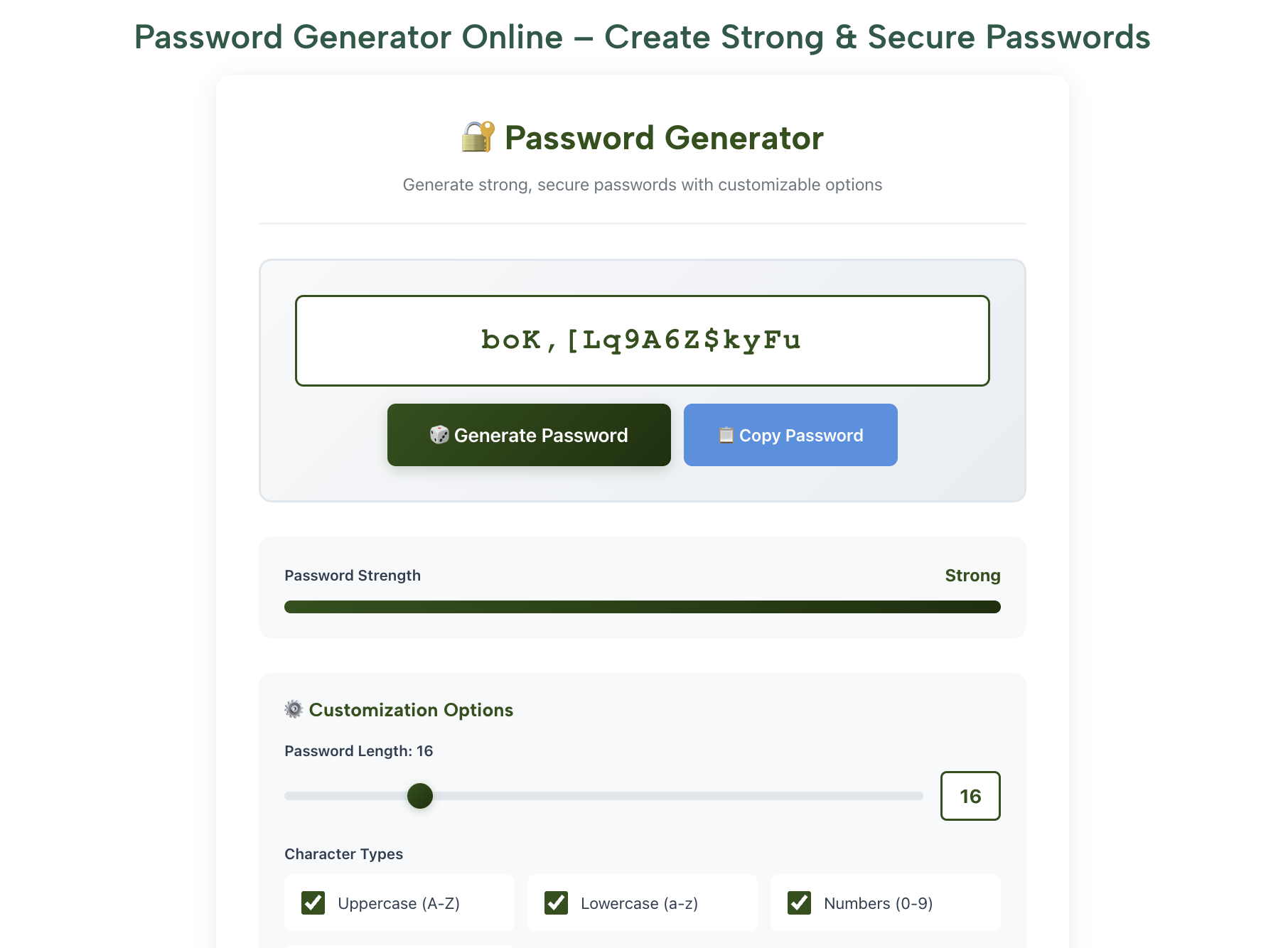
Example of a strong password:J0hn$ecure!497@
The stronger your password, the harder it is to crack — even with modern hacking tools.
Step-by-Step: How to Strengthen Your Password Protection
Step 1: Use a Password Manager
One of the easiest ways to secure your online accounts is with a password manager.
It automatically stores, encrypts, and autofills your passwords — so you don’t have to remember dozens of them.
Top options include:
- 1Password
- Bitwarden
- LastPass
- Dashlane
Pro tip: Many browsers like Chrome and Edge have built-in password suggestions — use them!
Step 2: Turn On Two-Factor Authentication (2FA)
Even if your password gets compromised, 2FA adds a second layer of defense.
This means you’ll need a code from your phone or email before logging in.
Common types of 2FA:
- SMS-based: A text code sent to your mobile
- App-based: Using apps like Google Authenticator or Authy
- Hardware keys: Physical devices like YubiKey for advanced security
It’s like having a digital deadbolt on your account.
Step 3: Audit Old Passwords
We all have old accounts — some forgotten, some reused.
Use a password checker tool or browser security dashboard to find and update weak passwords.
You can even use RankStreak’s upcoming Password Strength Checker to test how secure your passwords are.
It analyzes length, complexity, and uniqueness — and guides you on how to improve them.
Step 4: Avoid Reusing Passwords Across Sites
Here’s a scary truth:
If one site you use gets hacked, all your accounts using that same password are at risk.
Think about it:
If your Netflix password is the same as your Gmail password — a single leak can give hackers total access.
Always create unique passwords for every site — even if it’s a pain.
Your password manager can help you generate and store them safely.
Step 5: Stay Wary of Phishing Scams
Hackers don’t always “hack” — they trick you into giving your credentials away.
You might get an email that looks like:
“Your Amazon account has been locked. Click here to verify.”
When you click, you’re taken to a fake page that steals your login info.
Never click suspicious links.
Instead:
- Check the email sender carefully.
- Look for typos or urgent messages.
- Go directly to the official website manually.
Your awareness is your best security tool.
Weak vs. Strong Password Protection
| Security Practice | Weak Habit | Secure Habit |
|---|---|---|
| Password Length | 6–8 characters | 12–16+ characters |
| Reuse | Same password everywhere | Unique for every site |
| Storage | Written on notes or saved in plain text | Stored in encrypted password manager |
| 2FA | Disabled | Always enabled |
| Password Update | Rarely updated | Regularly reviewed |
By following just these five good habits, you can reduce your risk of hacks by over 90%.
Pro Password Protection Tips & Insights
Now that you know the basics, let’s level up your defenses.
Use Passphrases Instead of Passwords
Instead of “password@123”, try a random sentence like:
BlueElephantsDance@4am
It’s easy to remember but nearly impossible to crack.
Never Save Passwords in Notes Apps or Emails
If your phone or inbox is hacked, those saved passwords are gone.
Use encrypted storage or a password manager only.
Regularly Update Critical Accounts
At least every 3–6 months, rotate passwords for:
- Banking apps
- Email accounts
- Cloud storage
- Business tools
Even if they haven’t been breached, it’s a smart preventive step.
Enable Login Alerts
Platforms like Google, Facebook, and Microsoft allow login alerts.
Whenever someone logs in from a new device, you’ll get notified immediately.
Act fast if you get a suspicious alert.
Be Careful on Public Wi-Fi
Hackers often set traps on open Wi-Fi networks.
Avoid logging into sensitive accounts (like banking or email) on public Wi-Fi — or use a VPN for encryption.
Why Online Tools Can Help
Managing password security manually is hard — and risky.
That’s why using online tools helps simplify the process:
- Password strength checkers
- Secure QR generators
- Word counters for writing better copy (try RankStreak’s Word Counter Tool)
- Case converters for text editing
- Stopwatch tools to track time while managing tasks
These simple, free utilities make your digital life more organized and secure.
RankStreak’s tools are built for privacy — they don’t store any personal data, ensuring your usage stays 100% secure.
How RankStreak Is Building Safer Online Tools
RankStreak focuses on user privacy and simplicity.
Our goal is to make powerful tools that work directly in your browser — no sign-ups, no tracking, no data collection.
Upcoming tools like:
- Password Strength Checker
- Secure QR Generator
- Online Stopwatch
will help users like you stay safe, productive, and efficient — all in one trusted platform.
FAQs About Password Protection
1. What is password protection?
Password protection means securing your digital accounts using strong, unique, and regularly updated passwords — combined with 2FA and safe online practices.
2. How can I check if my password is strong?
Use a password strength checker tool that measures length, complexity, and uniqueness.
3. Is it safe to use password managers?
Yes! Trusted password managers use encryption to keep your data private.
4. How often should I change my password?
Every 3–6 months, especially for critical accounts like email and banking.
5. What’s the safest password format?
Use a passphrase — a mix of random words, numbers, and symbols (e.g., Moon$Runs@3am).
Conclusion: Don’t Wait for a Breach to Get Serious
Password protection isn’t optional — it’s survival.
Every click, login, and saved credential is a potential door to your digital life.
The question is — are your doors locked?
Start today:
✅ Update weak passwords
✅ Turn on 2FA
✅ Use a password manager
✅ Stay alert for phishing
And when RankStreak’s Password Strength Checker launches — test your passwords instantly to know how secure they really are.
Your privacy, data, and peace of mind depend on it.
Because in today’s world, security isn’t just smart — it’s essential.
#PasswordProtection #CyberSecurity #OnlineSafety #RankStreak #DigitalSecurity #PrivacyTools